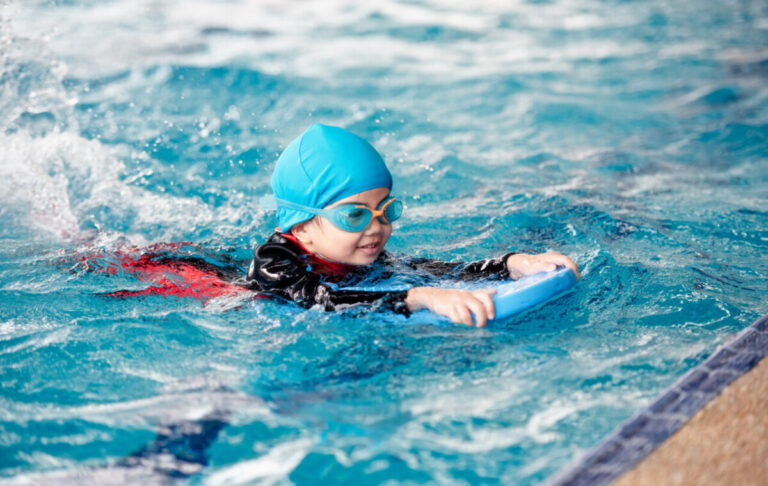
ISR Swim Lessons: Cost, Age, Safety & What Parents Should Know
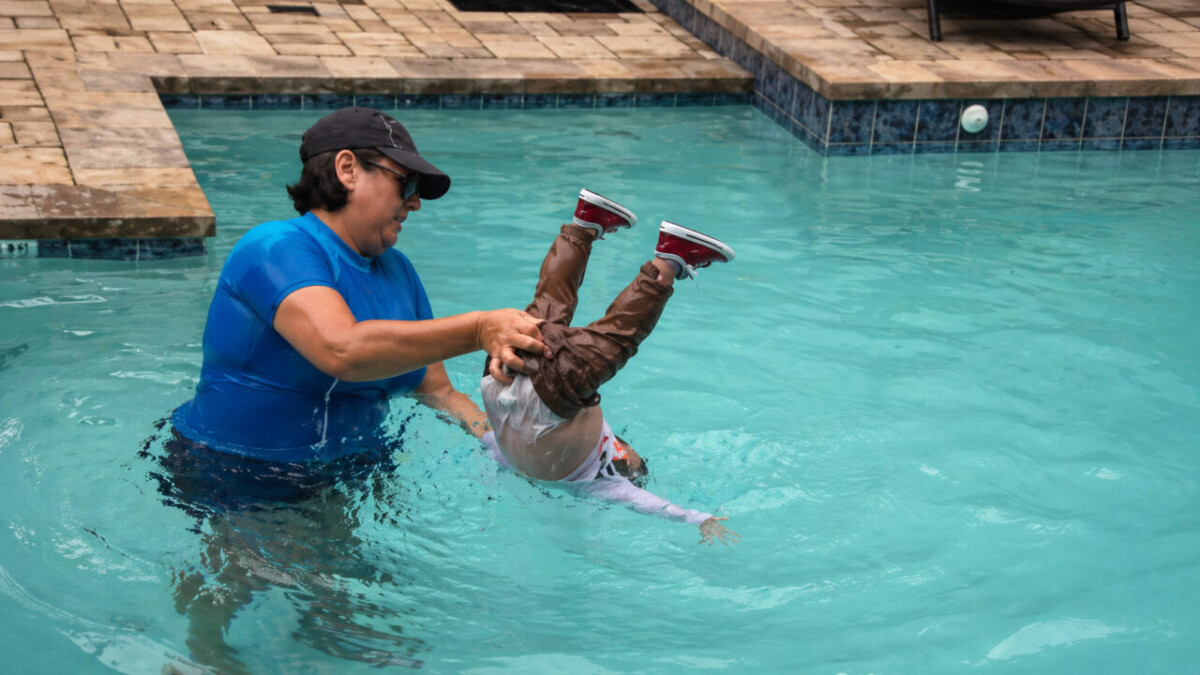
ISR swim lessons teach infants and young children a sequence of survival-oriented water skills, often through brief lessons held five days per week for several weeks. The format is very different from a weekly parent-and-child class.
Parents are often drawn to ISR after a frightening pool moment, but no program makes a child drown-proof. The right decision depends on developmental readiness, medical screening, instructor quality, family access to water, and how the child responds.
At a glance
- Format: Short one-on-one lessons, commonly five days per week
- Typical skill goal: Roll to a back float; older children may add swim-float-swim
- Cost structure: Registration plus a weekly lesson fee that varies by instructor and city
- Best use: One layer in a larger drowning-prevention plan
- Never replaces: Touch supervision, four-sided fencing, life jackets, and CPR readiness
What are ISR swim lessons?
Infant Swimming Resource is a branded survival-swim system. Lessons are typically private, short, and frequent. Infants work on rolling to a face-up float; mobile toddlers and preschoolers may progress to a swim-float-swim sequence and practice in clothing near the end of a session.
The repetition is the point: skills are revisited while fatigue and stress are monitored. That schedule can create rapid familiarity, but it also asks much more of a family calendar than a weekly recreational class.
ISR swim lesson cost and time commitment
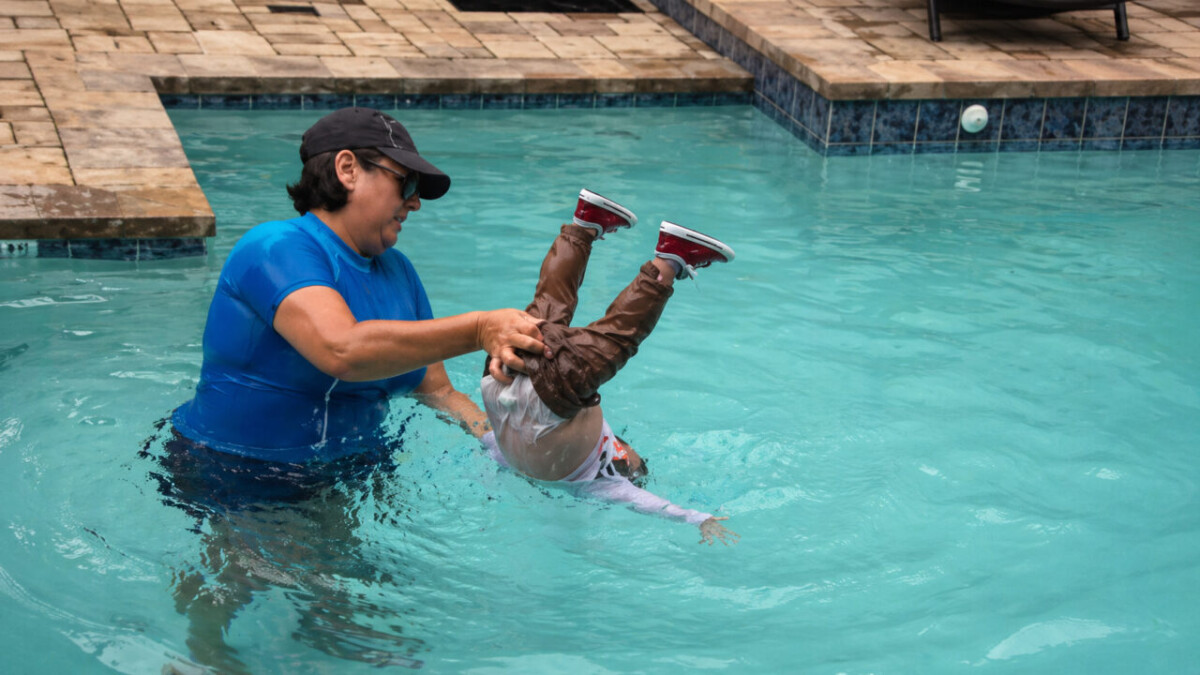
There is no single national ISR swim lesson price. Families generally pay a registration fee and a weekly amount set by the local instructor. Because lessons may run five days per week for roughly four to six weeks, compare the total program cost rather than a single 10-minute session.
Ask about missed-day policy, weather closures, sibling scheduling, refresher lessons, and whether the instructor charges separately for clothing practice. The hidden cost is often the daily drive and work disruption.
- Initial registration or screening fee
- Weekly lesson tuition
- Four-to-six-week daily transportation commitment
- Possible refresher lessons in later seasons
Age and developmental readiness
Some survival-swim providers accept babies once they meet mobility milestones, while the American Academy of Pediatrics emphasizes that swim lessons can begin for many children after age one and that readiness varies. The AAP also states there is no evidence that lessons for infants under one reduce drowning incidence.
Read the AAP’s current swim-lesson guidance, discuss health or developmental concerns with the child’s pediatrician, and ask the instructor how the program adapts to reflux, breathing issues, sensory needs, or prior water fear.
Safety concerns and signs of a good instructor
Crying does not automatically mean injury, but it is information. A qualified instructor should explain what behavior is expected, how fatigue is assessed, when a lesson stops, how water temperature is handled, and what parents should report before each session.
Parents should be allowed to understand the plan and see progress. Avoid anyone who promises a “drown-proof” child, dismisses medical history, or continues when the child shows concerning breathing, unusual lethargy, or repeated swallowing distress.

AAP guidance and ISR enrollment are not the same standard
| Source | What it says | What parents should conclude |
|---|---|---|
| American Academy of Pediatrics | Many children can begin swim lessons after age one when developmentally ready. There is no evidence that infant programs under age one reduce drowning risk. | Age alone is not proof of readiness, and a class is only one layer of drowning prevention. |
| Infant Swimming Resource | Its official program serves children roughly 6 months through 6 years with short, frequent, one-on-one lessons. | This is the provider’s enrollment policy; it is not an AAP endorsement or a “drown-proof” guarantee. |
Use the AAP parent guidance for the medical-safety framework and the official ISR site for the provider’s current program description. Neither source removes the need for touch supervision, barriers, appropriate life jackets, and adult CPR readiness.
Instructor and readiness checklist before paying
- Ask for current training credentials, CPR/first-aid status, insurance, and the emergency action plan.
- Observe a lesson. Confirm one-on-one attention, clean and comfortably warm water, and a stop rule for fatigue, breathing trouble, repeated swallowing distress, illness, or unusual lethargy.
- Disclose reflux, respiratory conditions, developmental differences, seizures, recent illness, and strong water fear; ask the pediatrician when health history makes readiness unclear.
- Ask how progress is measured, how distress is handled, what parents may observe, and what happens when a child is not adapting.
- Reject “drown-proof” language. A demonstrated float in a lesson is not a guarantee in cold water, clothing, waves, injury, panic, or an unsupervised fall.
Pros and cons of ISR swim lessons
| Potential advantage | Potential drawback |
|---|---|
| Frequent one-on-one practice | Demanding weekday schedule |
| Focus on recovery and floating | Less emphasis on playful group learning |
| Clear short-term skill sequence | Cost varies and can be substantial |
| May increase parent attention to water safety | Can create false confidence if marketed poorly |

The safety layers that still matter
Even a child who can roll and float needs an attentive adult within arm’s reach in or near water. Use four-sided pool fencing, self-latching gates, door alarms where appropriate, Coast Guard-approved life jackets for boating and open water, and adult CPR training.
A life jacket is safety equipment, not a swim-teaching substitute. Check the label for the child’s current weight and activity before buying.
How to decide as a parent
Observe a lesson, interview the instructor, and compare the daily program with a warm, play-based class. Our ISR vs traditional swim lessons comparison lays out the schedule, teaching goals, and family-fit tradeoffs side by side. Choose the method that develops real water competence while preserving trust and fitting your family’s risk profile.
This article is educational and not medical advice. A pediatrician and qualified local instructor should address individual health or developmental concerns.
Frequently asked questions
How much do ISR swim lessons cost?
Pricing varies by instructor and city and usually includes registration plus weekly tuition. Ask for the total four-to-six-week cost and missed-lesson policy.
How long are ISR swim lessons?
Lessons are commonly about 10 minutes, five days per week, over several weeks, but the exact schedule depends on the provider and child.
Do ISR swim lessons make a baby drown-proof?
No. No swim program replaces close supervision, barriers, life jackets, and adult rescue and CPR readiness.
What age should swim lessons start?
The AAP says lessons can begin for many children after age one, depending on readiness. Discuss younger-infant programs and health concerns with a pediatrician.
Keep planning with ATL Playbook
Editorial note: Details were checked in August 2026. Prices, schedules, policies, and availability can change; confirm the final terms before paying or traveling.