How to Clean a Dehumidifier and Keep It Running Efficiently
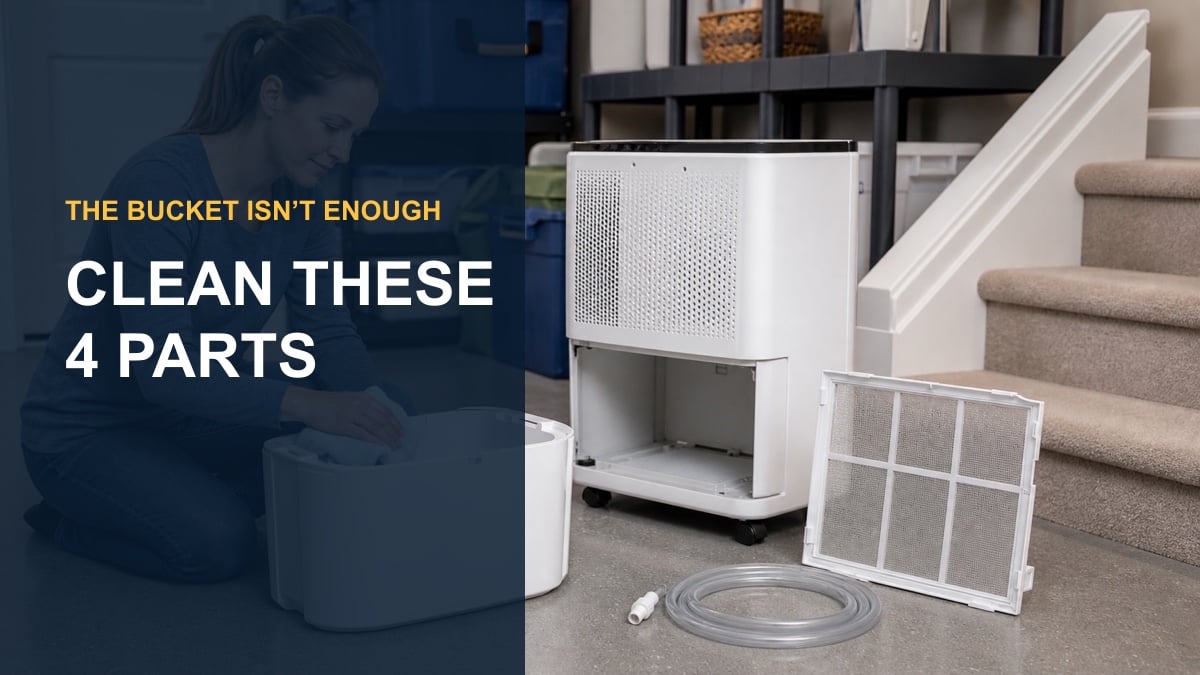
In late-summer humidity, a dehumidifier can run for hours every day. Dust on the filter and residue in the bucket make that hard-working appliance noisier, less effective, and more likely to smell.
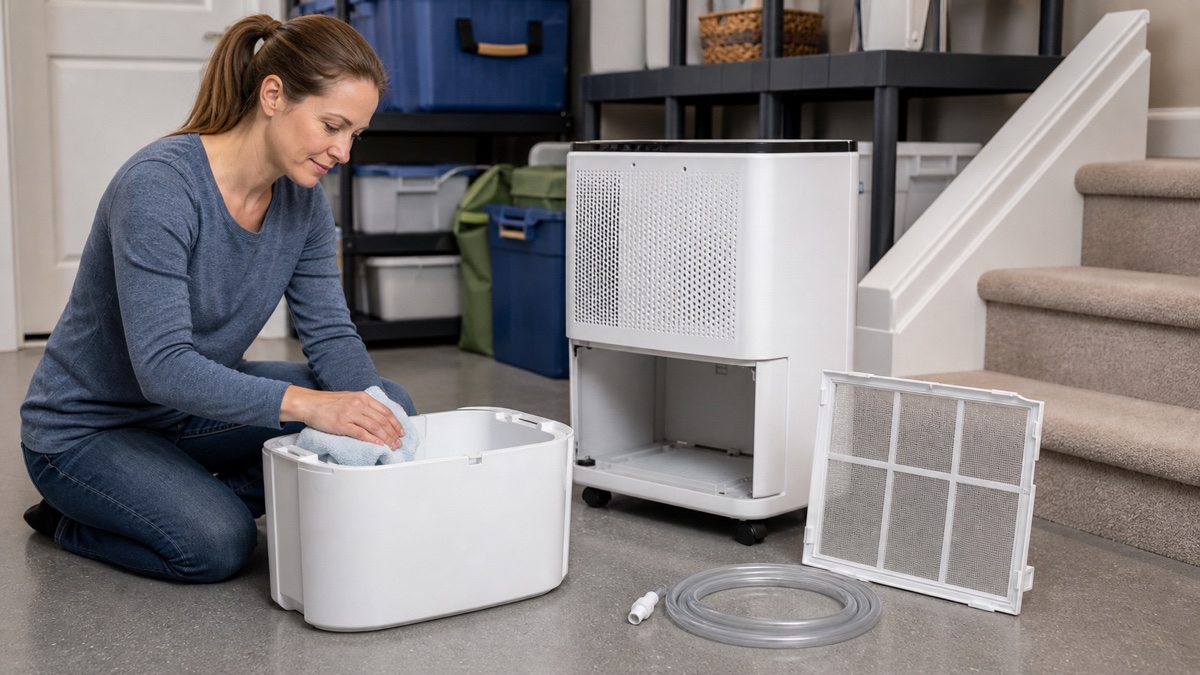
Unplug the unit before cleaning, empty and wash the bucket regularly, keep the air filter clean, and inspect the drain hose so air and water can move freely.
A dehumidifier cannot control humidity efficiently when its filter is blocked, its airflow is restricted, or its drain path is dirty.
How Often to Clean a Dehumidifier
| Part | Practical check | Clean sooner when |
|---|---|---|
| Water bucket | Each time it is emptied; wash when film appears | There is odor, slime, or visible residue |
| Air filter | Inspect every two weeks during heavy use | The filter looks dusty or airflow drops |
| Intake and exhaust grilles | Check monthly | Dust is visible or the fan sounds strained |
| Drain hose or pump line | Inspect monthly | Water backs up, leaks, or stops draining |
These are inspection reminders, not replacements for the manual. Filter design, washability, pump maintenance, and cleaning intervals differ by model.
How to Clean a Dehumidifier Safely
- Turn the unit off, unplug it, and allow it to cool.
- Empty the bucket and remove any splash guard or handle only when the manual shows how.
- Wash the bucket with mild soap and water, then rinse and dry it. Avoid bleach or ammonia unless the manufacturer explicitly permits it.
- Clean the washable air filter according to the manual and let it dry fully.
- Vacuum loose dust from accessible intake and exhaust grilles without pushing the nozzle into the machine.
- Wipe the cabinet with a well-wrung cloth, keeping water away from controls and electrical openings.
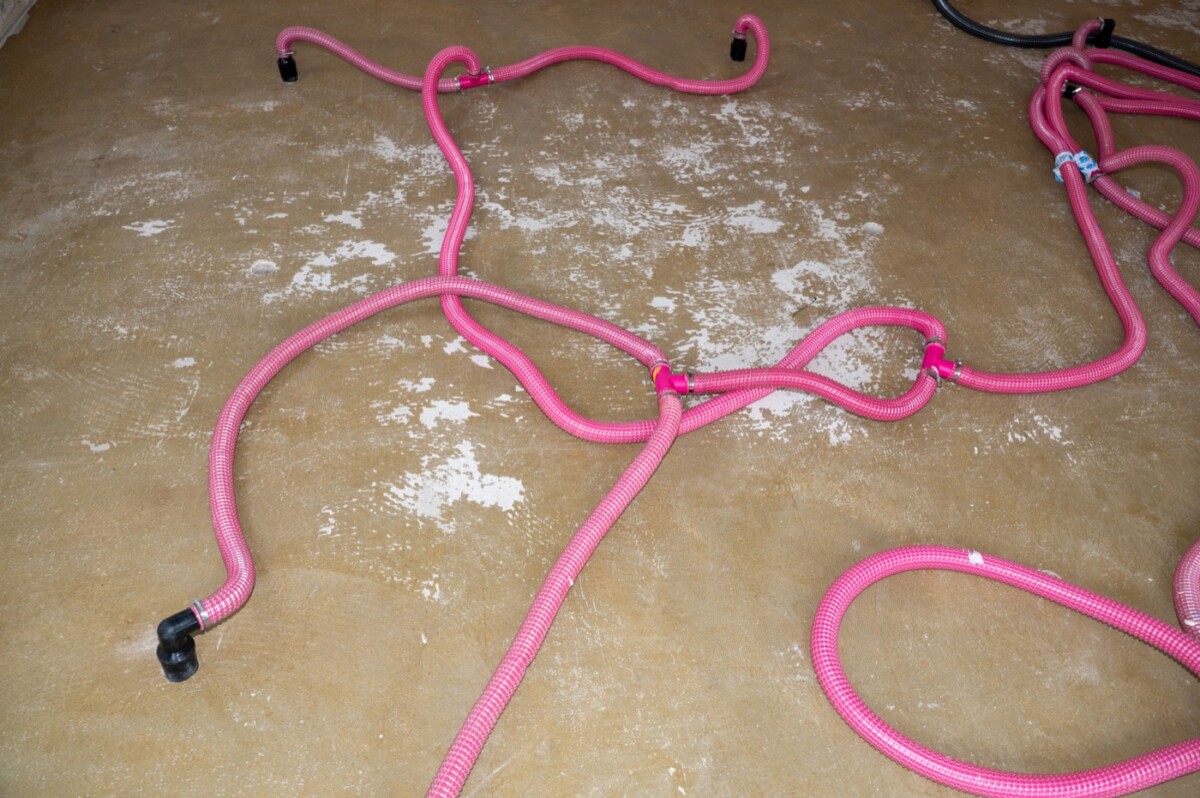
- Inspect the gravity drain hose or pump line for kinks, buildup, and leaks; flush it only as the manual directs.
- Reinstall only completely dry parts, reconnect the drain, and verify that the bucket and float sit correctly.
Never spray cleaner or water into the air grilles, controls, or electrical housing. Do not run the unit without its filter or bucket installed correctly, and never reinstall a damp filter.

Clean the Filter Without Damaging It
Some filters can be vacuumed, some can be rinsed, and some must remain dry. “Washable” is a model-specific instruction. Never reinstall a damp filter, and do not poke a vacuum nozzle through delicate mesh.
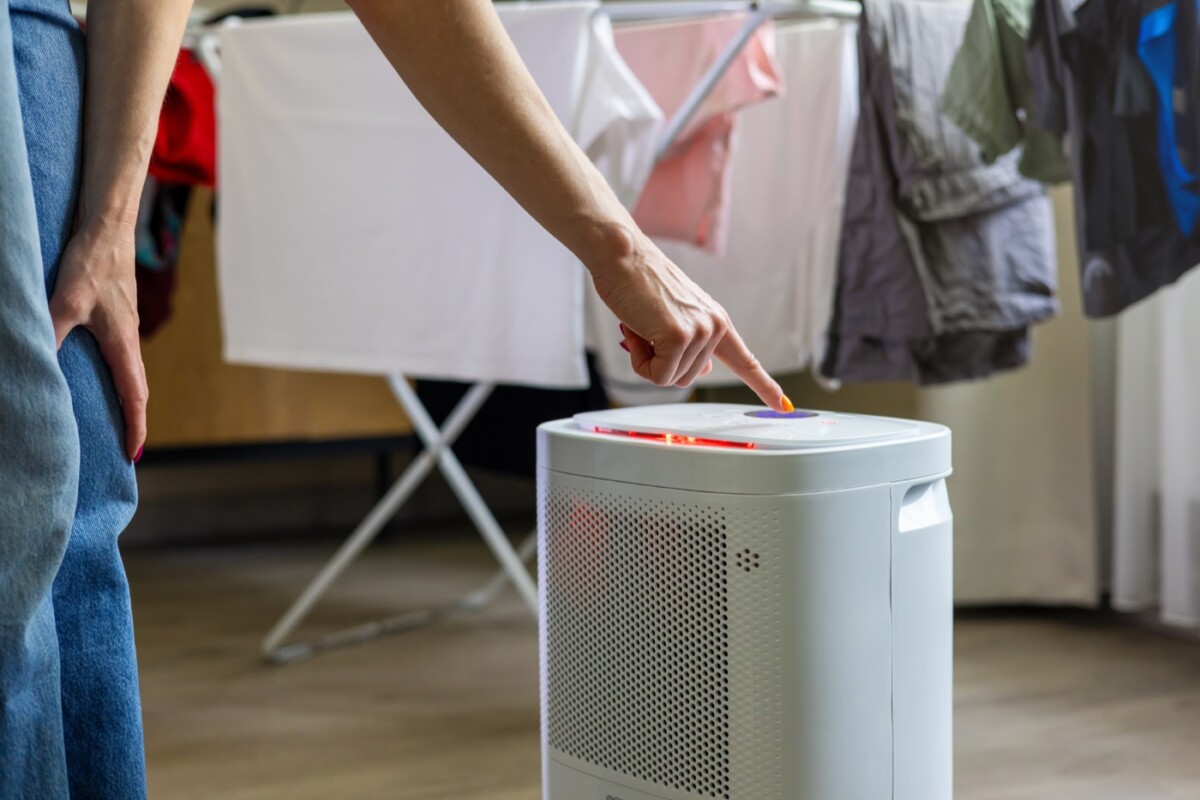
Improve Efficiency Without Over-Drying the Room
- Give the intake and exhaust the clearance required by the manual.
- Close exterior doors and windows while the unit is running.
- Use a hygrometer to verify room humidity instead of choosing the lowest setting automatically.
- Fix plumbing leaks and water entry rather than asking the machine to overcome a constant source.
- Choose continuous drainage only when the hose slopes correctly or the pump setup follows the manual.
Warning Signs That Need More Than Cleaning
Stop and investigate if the unit leaks, repeatedly freezes, trips a breaker, smells electrically hot, makes a new grinding sound, or fails to shut off when the bucket is full. A clean filter cannot correct a failed float, pump, fan, sensor, or refrigeration system.
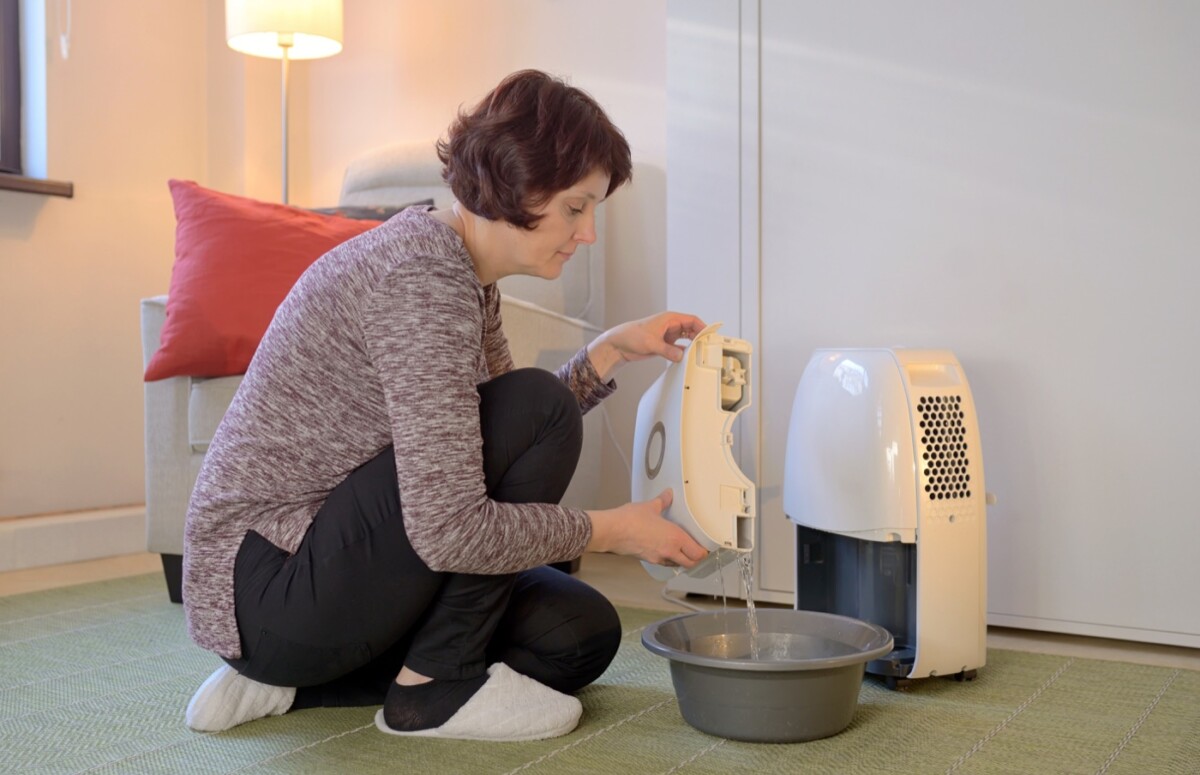
A Ten-Minute Late-Summer Reset
- Empty and inspect the bucket.
- Check the filter against a light and clean it as directed.
- Dust the grilles and confirm clear space around the cabinet.
- Look for hose kinks and leaks.
- Verify the set point with a separate hygrometer.
- Watch one drainage cycle before leaving the unit unattended.
For the rest of the home airflow routine, see how often to change an HVAC filter in Georgia and when to replace a vacuum filter.
Frequently asked questions
How often should I clean a dehumidifier filter?
Inspect it every two weeks during heavy use and clean it at the model-specific interval. Dust, pets, and renovation work can require earlier attention.
Why does my dehumidifier bucket smell?
Standing water and residue can support odor-producing growth. Wash the bucket with mild soap and water, dry it, and check the drain path.
Can I run a dehumidifier all day?
Many units cycle automatically, but the correct duty cycle depends on room conditions, capacity, set point, drainage, and the manual. Continuous running with little water removal can indicate a sizing, airflow, temperature, or service problem.
Sources and model guidance
Guidance checked in August 2026. Your appliance manual and product label take priority because removal steps, washable parts, and service intervals vary by model.