
How to Clean a Dishwasher Filter (Without Damaging It)
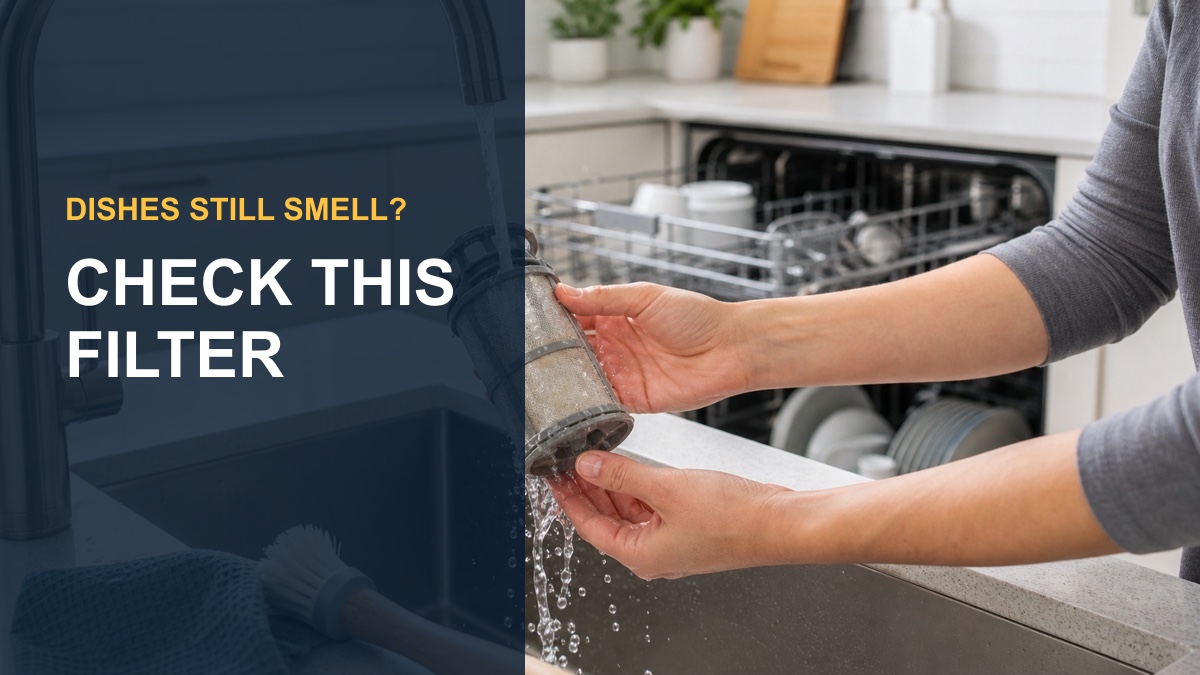
You unload a supposedly clean dishwasher, hold up a glass—and find gritty specks baked onto it. Then you open the door again and catch that stale, sour smell.
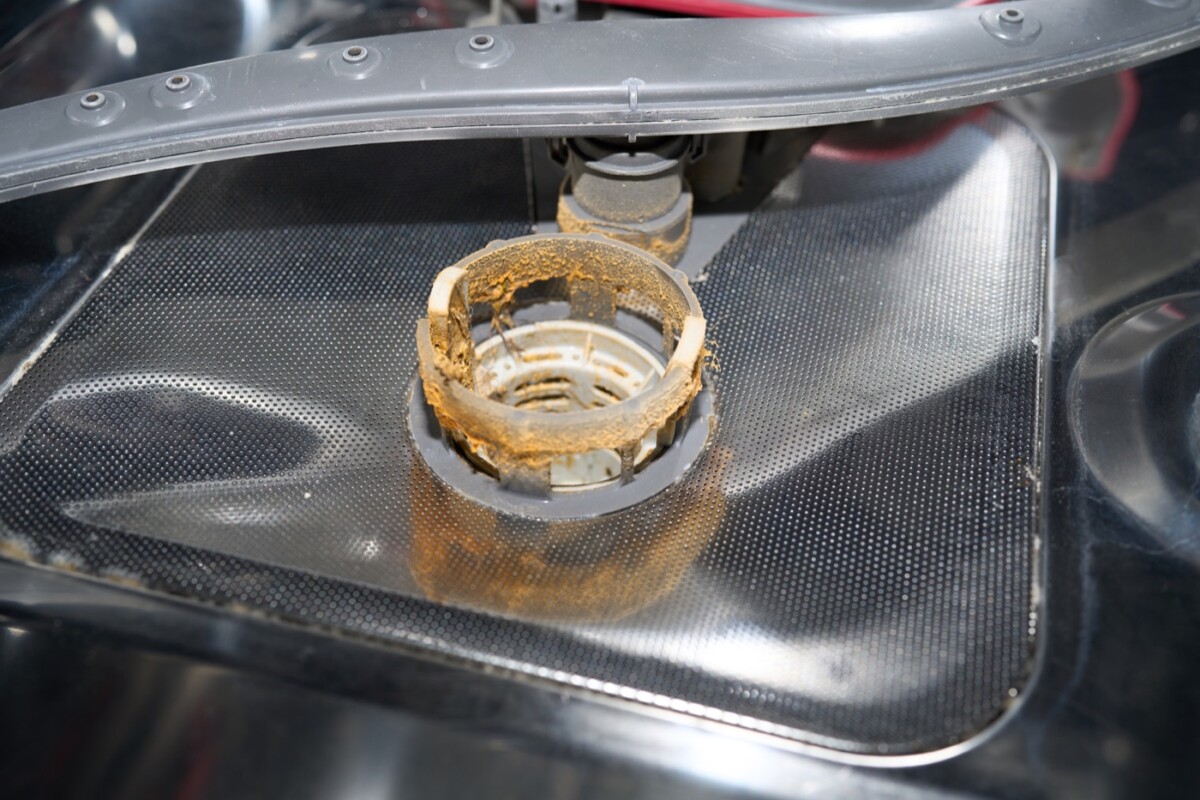
The likely hiding place is not the detergent compartment. It is the filter beneath the lower rack, where weeks of sauce, grease, labels, and food fragments can collect out of sight.
Cleaning that small assembly is one of the quickest and most satisfying resets in the kitchen: the cloudy, grimy screen goes in, and a clean mesh comes back out minutes later.
Regular filter care can clear ordinary buildup before it contributes to poor washing or slow drainage—and may save an unnecessary service call. If standing water remains after cleaning, however, stop and troubleshoot the drain system or call a technician.
Most removable dishwasher filters can be rinsed under warm running water and gently brushed, but the correct interval and removal direction always come from the manual for your exact model.
A filter that still turns freely after reinstallation may not be locked. Do not run the dishwasher until it is seated correctly.
Does Your Dishwasher Have a Filter You Need to Clean?
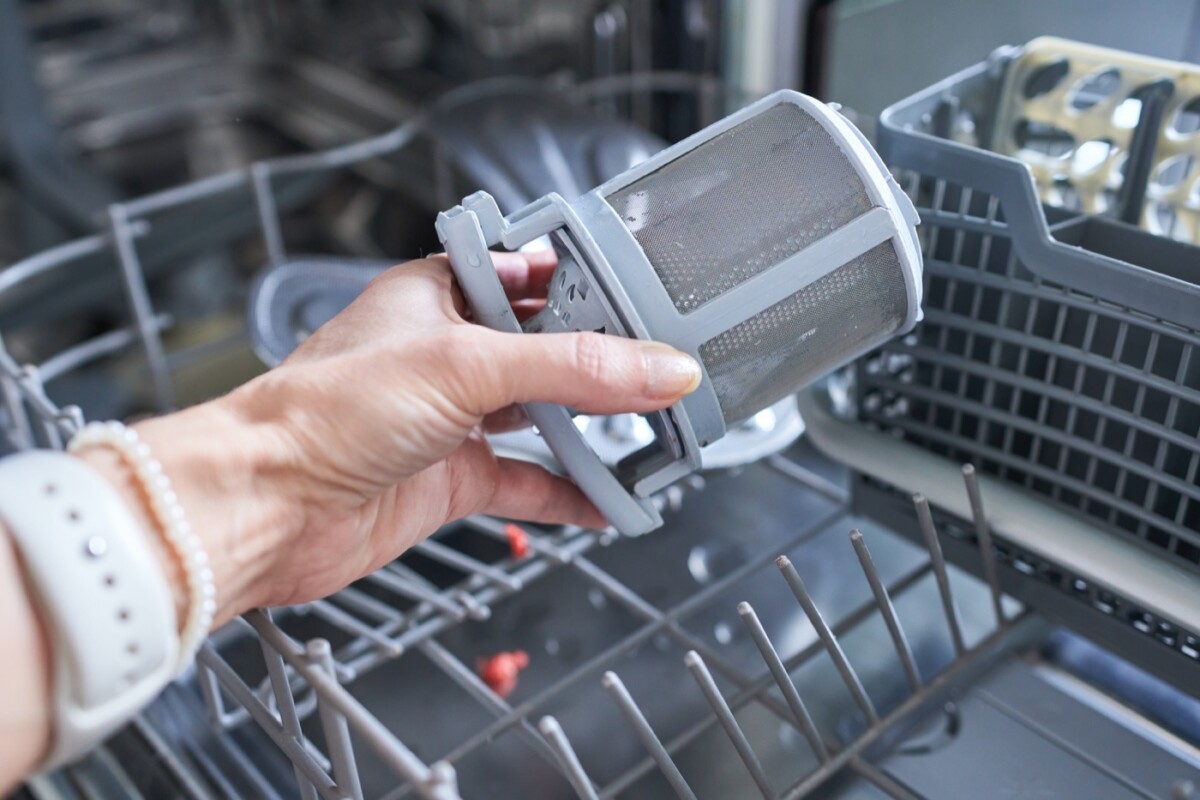
Many newer machines use a removable manual-clean filter near the base of the lower spray arm. Other models use a self-cleaning system or a small foreign-object cup. Pull the model number from the door frame and confirm the design in the owner’s manual before twisting anything.
| What you see | Likely system | What to do |
|---|---|---|
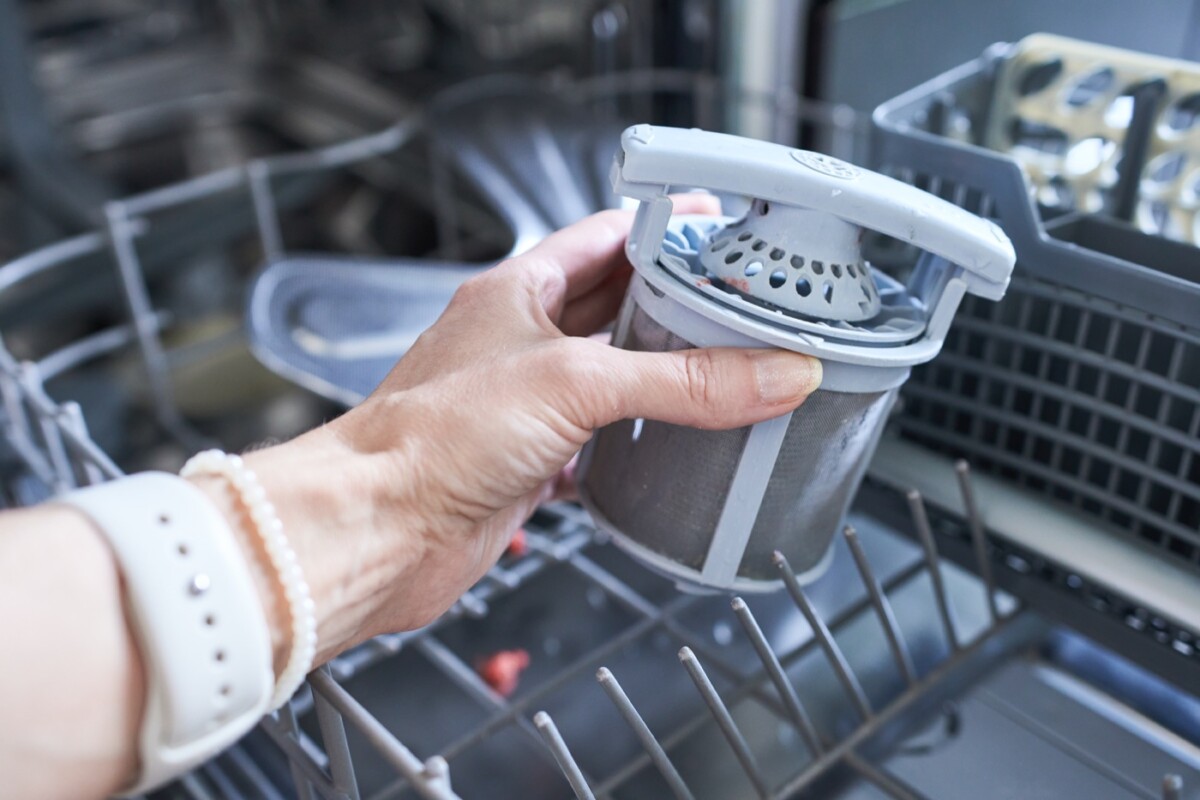
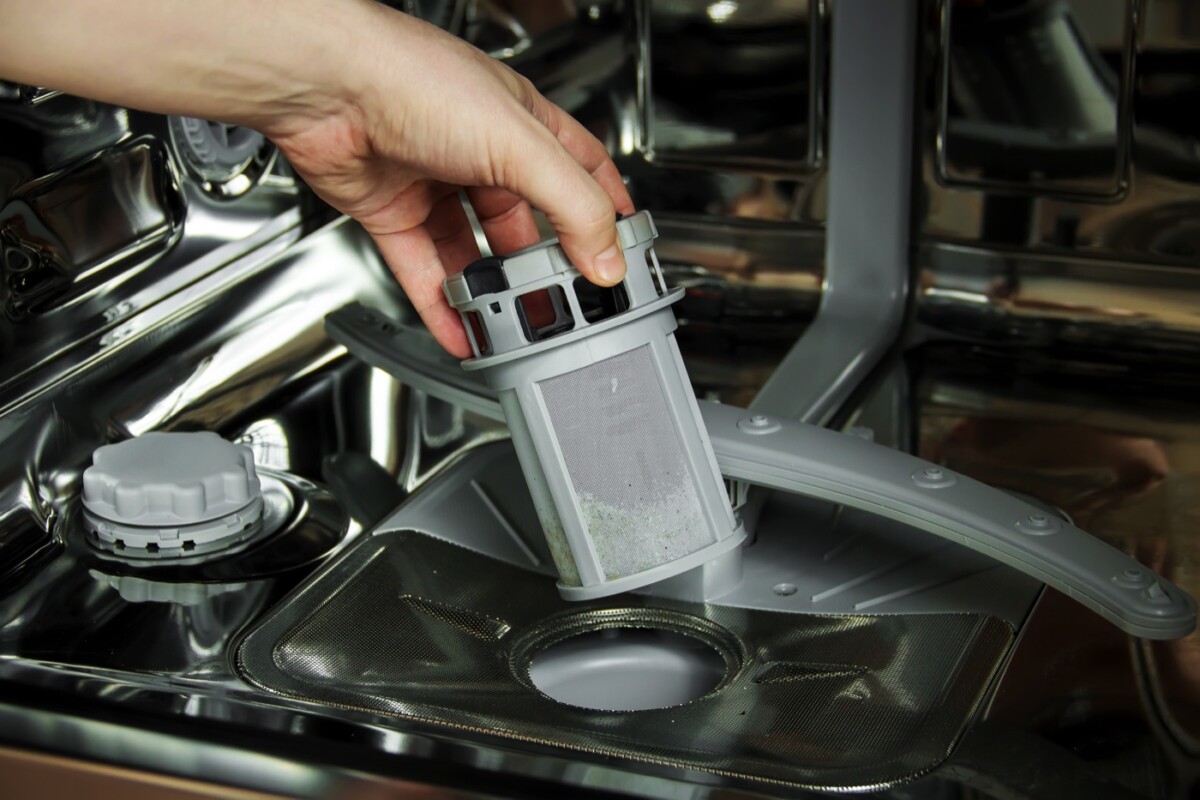
| Round cylinder with twist handle | Manual-clean upper filter | Unlock and remove only as the manual shows |
| Flat mesh plate under the cylinder | Lower filter | Lift only after the upper assembly is removed |
| No obvious removable cylinder | Possibly self-cleaning | Do not pry; check the model manual |
How Often to Clean a Dishwasher Filter
A monthly inspection is a practical starting point. Whirlpool’s current guidance says monthly cleaning for frequent use and every two weeks for a large family or daily cycles, while individual manuals may specify one to three months. Hard water, greasy loads, paper labels, and heavy food soil can shorten the interval.
- Clean sooner when dishes feel gritty.
- Check the filter when a clean machine develops an odor.
- Inspect it if drainage slows or food returns to glassware.
- Replace a cracked, warped, or torn filter instead of scrubbing harder.
How to Clean a Dishwasher Filter: The Five-Minute Reset
Keep a small towel beside the machine, then use this sequence as your at-a-glance guide.
| Action | Practical method | Pro tip |
|---|---|---|
| Locate & twist | Unlock the filter at the tub bottom in the direction shown by the manual—often counter-clockwise. | Keep a small towel handy for trapped water. |
| Rinse & soak | Rinse under warm water; soak briefly in mild dish soap for heavy grease. | Skip bleach unless the manual explicitly permits it; it can harm some plastics and seals. |
| Gently scrub | Clear fine mesh crevices with a soft nylon brush and light pressure. | Never use steel wool, a wire brush, or a butter knife. |
| Lock & secure | Align the marks and twist until the filter is firmly locked. | A loose filter can let debris recirculate toward the spray system. |
- Turn the dishwasher off, let hot parts cool, and remove the lower rack.
- Photograph the filter position so the locking direction is easy to confirm.
- Rotate and lift the upper assembly exactly as the manual directs; remove the lower screen only if the model allows it.
- Rinse under warm running water. Use a soft nylon brush and a little mild dish soap for stuck residue.
- Inspect the sump without reaching blindly. Use tongs for visible debris and take special care around broken glass.
- Reinstall the lower filter flat, then lock the upper filter. It should not spin freely.
The Mesh-Safe Tool for the Stubborn Bits
Rinsing removes loose food, but grease wedged inside the micro-mesh sometimes needs extra encouragement. Whatever you do, do not reach for a wire pad or knife that can puncture the screen.
The OXO Good Grips Kitchen Appliance Cleaning Set includes a loop brush designed for mesh screens and tight appliance spaces. Use only the brush with light pressure—never the included scraper on filter mesh—and stop if your manual prohibits brushing.

Never use a wire brush or scouring pad on filter mesh, and never operate the dishwasher with the filters loose or missing. Abrasive tools can damage the screen; a loose assembly can damage the machine.
Mistakes That Make the Problem Worse
Pouring drain opener into a dishwasher, forcing a filter that will not turn, and running a cycle without the filter can turn simple maintenance into a repair. Strong fragrance may temporarily cover an odor, but it does not remove food trapped under the filter or around the seal.
A Five-Minute Monthly Reset
- Scrape large food pieces before loading.
- Rinse the filter and wipe the door gasket.
- Spin the spray arms by hand and check that holes are open.
- Run the cleaning cycle or product specified by the manufacturer.
- Leave the door slightly open after the cycle when the manual permits it.
For the rest of the kitchen routine, pair this task with our microwave grease guide and food-safe refrigerator organization system.
Frequently asked questions
Can I clean a dishwasher filter with vinegar?
Rinsing and a soft brush are the safest default. Use vinegar only when the manual permits it, and never mix it with chlorine bleach or another cleaner.
Why does the dishwasher smell after I cleaned the filter?
Food may remain in the sump, door seal, spray-arm holes, drain hose, or air gap. If water remains in the tub or the odor returns quickly, stop troubleshooting and arrange service.
Can I run the dishwasher without the filter?
No. A removable filter must be installed and locked before operation.
Sources and model guidance
Guidance checked in August 2026. Your appliance manual and product label take priority because removal steps, washable parts, and service intervals vary by model.