Are ZZ Plants Toxic to Cats and Dogs? Pet Safety Guide
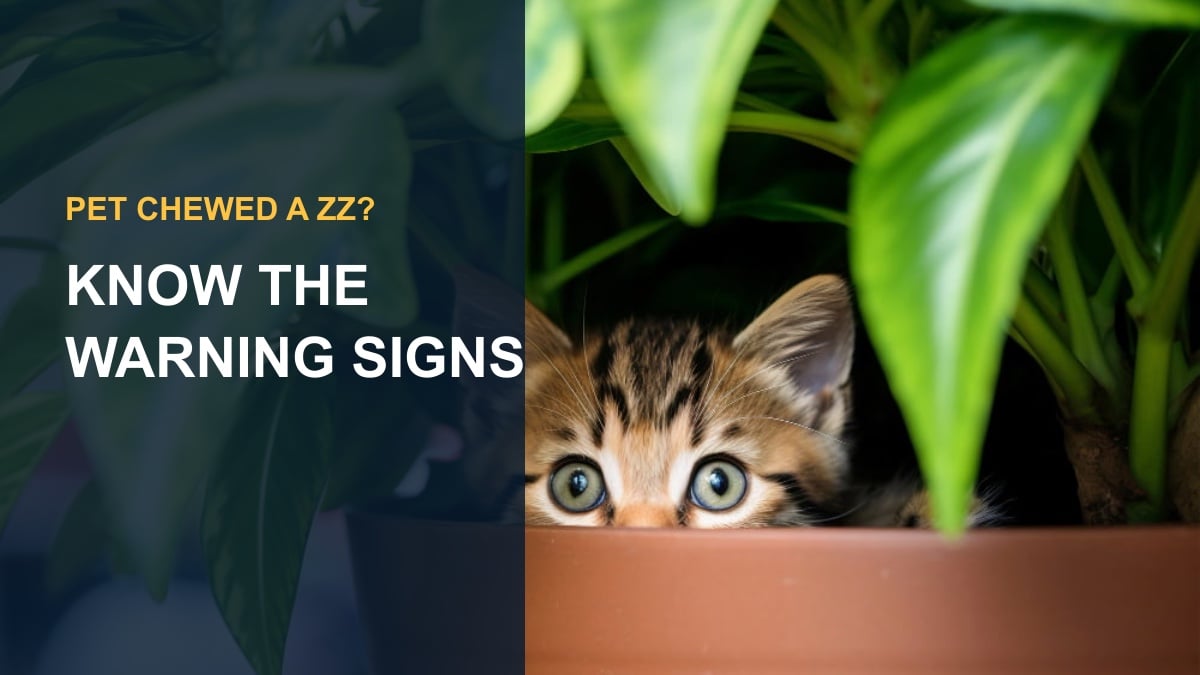

Yes. ZZ plants (Zamioculcas zamiifolia) are toxic to cats and dogs because they contain insoluble calcium oxalate crystals. Chewing a leaf or stem can cause immediate irritation of the mouth and digestive tract. Keep the plant, fallen leaves, and pruned pieces inaccessible to pets.
If your pet may have chewed a ZZ plant, remove access and contact your veterinarian. In the United States, you can also call the ASPCA Animal Poison Control Center at 888-426-4435; a consultation fee may apply. Difficulty breathing, collapse, severe swelling, or repeated vomiting requires urgent veterinary care.
Why ZZ Plants Are Poisonous to Pets
All parts of the plant can contain sharp microscopic calcium oxalate crystals. Biting or chewing releases the crystals into sensitive mouth tissue. The resulting pain often limits how much an animal continues to eat, but exposure severity cannot be judged safely from that assumption.
ZZ Plant Poisoning Symptoms in Cats and Dogs
- Drooling or foaming at the mouth.
- Pawing at the mouth, lip licking, or head shaking.
- Retching, nausea, vomiting, or diarrhea.
- Reduced appetite or reluctance to drink because the mouth hurts.
- Redness or swelling around the mouth.
- Rare but urgent difficulty swallowing or breathing.
Cats may hide discomfort, while dogs may chew a larger piece. Do not wait for every symptom to appear before seeking advice if you saw the exposure or found fresh bite marks.
What to Do If a Cat or Dog Chews a ZZ Plant
- Move the pet away from the plant and prevent a second exposure.
- Remove loose plant material from the mouth only if you can do so safely without being bitten.
- Take a photo of the plant, damage, nursery label, and any vomited material.
- Call your veterinarian or an animal poison-control service promptly.
- Follow professional instructions; do not induce vomiting or give food, medication, oil, or another home remedy unless directed.
- Go to an emergency veterinary clinic for breathing trouble, major swelling, collapse, or severe ongoing symptoms.
How to Keep Pets Away From a ZZ Plant
Use a genuinely inaccessible location
A low shelf is not safe for a climbing cat, and a lightweight floor pot is easy for a dog to tip. Use a closed room, secure high placement with no launching point, or a physical plant cabinet that still provides adequate light and airflow.
Remove fallen plant material immediately
Pruned stems and dropped leaflets are easier for pets to reach than the pot. Bag and discard trimmings, clean tools, and check the floor after moving or repotting the plant.
Reduce boredom and plant chewing
Provide species-appropriate enrichment and discuss persistent plant chewing with your veterinarian. Deterrent sprays are not a substitute for access control and may introduce a separate irritation risk.
Are Some ZZ Plant Varieties Pet Safe?
No common ZZ plant cultivar should be treated as pet safe. Raven ZZ, dwarf Zenzi, variegated ZZ, and plants sold as Emerald Palm are still forms of Zamioculcas zamiifolia. Color or growth habit does not remove the calcium oxalate risk.
“Emerald Palm” is especially confusing because it sounds like a separate palm. Our Emerald Palm identity guide explains why it is another common name for the ZZ plant.
ZZ Plant Pet Safety FAQs
Can a ZZ plant kill a cat or dog?
The expected effect is painful mouth and gastrointestinal irritation, and life-threatening outcomes are not the typical pattern described by veterinary sources. However, breathing difficulty, severe swelling, dehydration, or other complications can become urgent. Always contact a veterinarian for the actual exposure.
Is touching a ZZ plant dangerous to pets?
Chewing is the main concern. Sap on fur, paws, eyes, or damaged skin can also cause irritation and may be swallowed during grooming. Ask a veterinarian how to rinse a specific exposure.
Is the ZZ plant toxic to people too?
Yes, the same calcium oxalate crystals can irritate people. Human first aid is different from pet guidance; see Is the ZZ Plant Toxic to Humans? and contact Poison Control for a human ingestion.
Veterinary and Plant References
Pet symptoms and next-step guidance were checked against ASPCA guidance. Plant identity and calcium oxalate toxicity are documented by NC State Extension. This guide is educational and does not replace veterinary diagnosis.