How Often Should You Change Your HVAC Filter in Georgia?
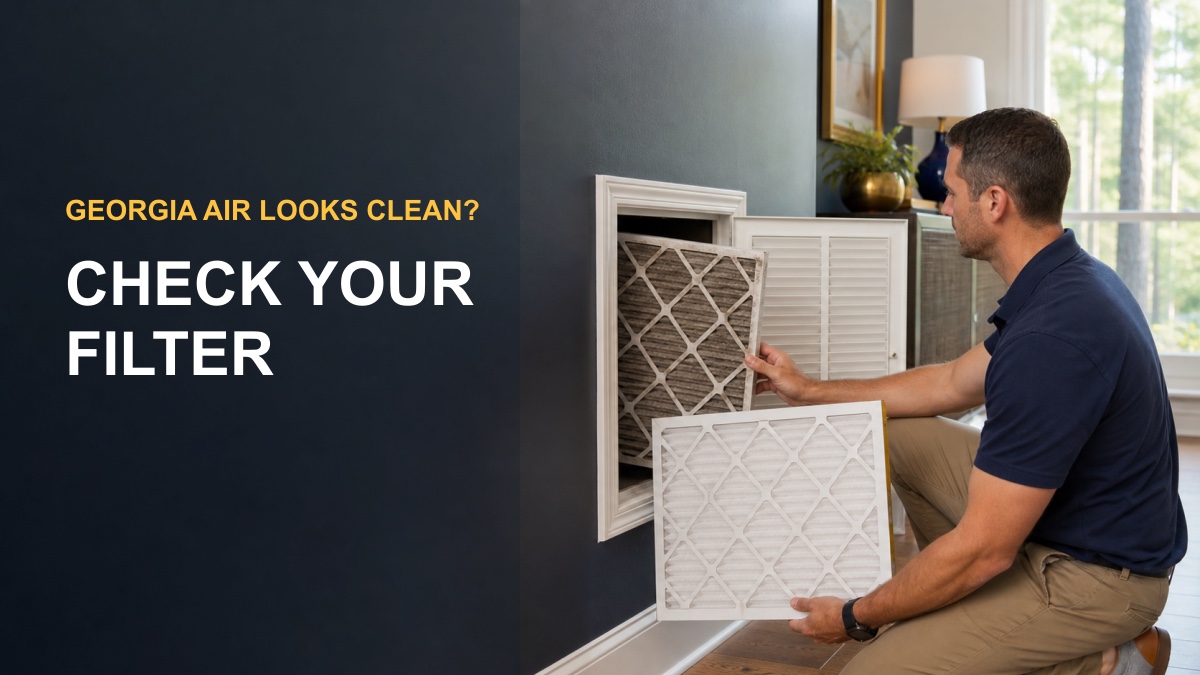
Georgia pollen can turn a porch yellow overnight, while an August air conditioner may run for hours. The filter inside can load up before the calendar reminder arrives.
Check a Georgia home’s HVAC filter every month. Many one-inch filters land in a 30-to-90-day replacement window, but pets, pollen, smoke, renovations, and long cooling cycles can shorten it.
A thick media cabinet may have a much longer manufacturer interval. The correct answer begins with filter thickness, system instructions, and what the filter actually looks like.
In Georgia, “every 90 days” is a starting estimate—not permission to ignore a filter through spring pollen and peak cooling season.
The Georgia Filter Calendar: 30, 60, or 90 Days?
| Home conditions | Practical check | Likely replacement pace |
|---|---|---|
| No pets, light system use, clean one-inch filter | Inspect monthly | Often 60–90 days |
| One shedding pet or active spring pollen | Inspect every 3–4 weeks | Often 30–60 days |
| Multiple pets, smoke, construction, or heavy dust | Inspect every 2–4 weeks | Often about 30 days or sooner |
| Four- or five-inch media filter | Check the cabinet and manual | Often several months; exact model rules |
EPA says manufacturers typically recommend 60 to 90 days, while ENERGY STAR advises checking monthly and replacing a dirty filter at least every three months.
Those national baselines need local judgment. Atlanta’s long cooling season and spring pollen can increase how much air and debris move through the filter.
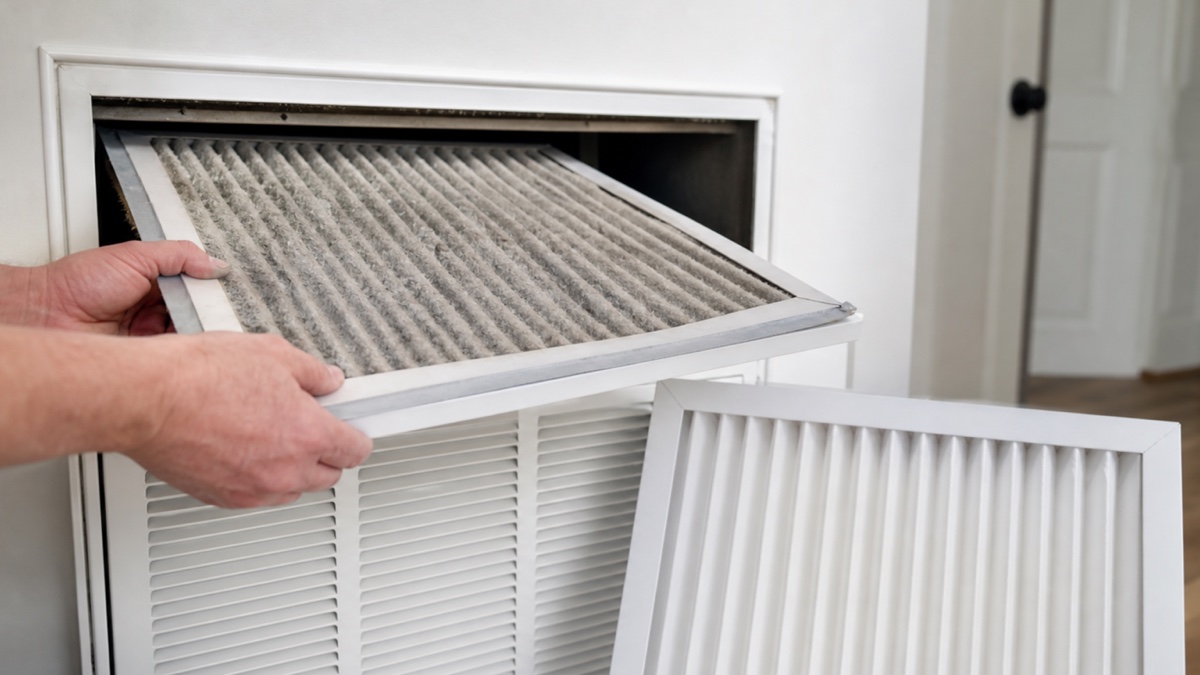
Write the installed date on the filter frame and photograph it in the same light each month. The comparison makes gradual gray loading much easier to see.
Three Tests That Beat the Calendar
- Light test: compare the used filter with a new one. Heavy, even gray loading means airflow is being restricted.
- Edge test: look for dust bypass around the frame. A crushed, undersized, or poorly seated filter is not doing its full job.
- System test: notice longer run times, reduced airflow, or unusual cycling. These symptoms need investigation, not just a new filter.
A little surface dust is normal. Replace sooner when the pleats are heavily loaded, the frame is damp or damaged, or the manual’s maximum interval arrives.
MERV Without the Guesswork
MERV describes how well a filter captures tested particle sizes. A higher number generally captures smaller particles, but it can also add resistance if the system is not designed for it.
EPA recommends MERV 13, or the highest rating the system fan and filter slot can accommodate. Confirm compatibility in the manual or with a qualified HVAC technician.
Do not force a thicker or higher-resistance filter into a system that was not designed for it. A tight fit means no air gaps—not a bent frame or crushed filter.
How to Change an HVAC Filter Correctly
- Turn the system off at the thermostat before opening the return or filter cabinet.
- Photograph the old filter orientation. Note the printed airflow arrow.
- Confirm all three dimensions. Nominal and actual sizes can differ.
- Insert the new filter with the arrow toward the blower. It should sit flat without gaps.
- Close and secure the grille or cabinet. Restore the system and listen for abnormal noise.
- Record the date and inspect monthly. Let actual loading set the next interval.
Continue the airflow reset with our tower fan cleaning guide. If humidity remains high after airflow issues are corrected, use the dehumidifier cleaning and efficiency checklist.
Frequently asked questions
Is every 30 days too often for an HVAC filter?
Not during heavy pollen, smoke, renovation dust, multi-pet shedding, or constant system use. Inspect the filter instead of replacing a clean one automatically.
Can a dirty filter make an air conditioner freeze?
Restricted airflow can contribute to coil icing, but low refrigerant and other faults can also cause it. Turn the system off and arrange service if icing occurs.
Where is the filter in my house?
Common locations include a large return grille, a slot beside the indoor air handler, or a media cabinet. Some homes have more than one filter location.
Sources and model guidance
Guidance checked in August 2026. Always follow the manual and label for the exact appliance, filter, or textile.