How to Clean a Tower Fan Before Putting It Away
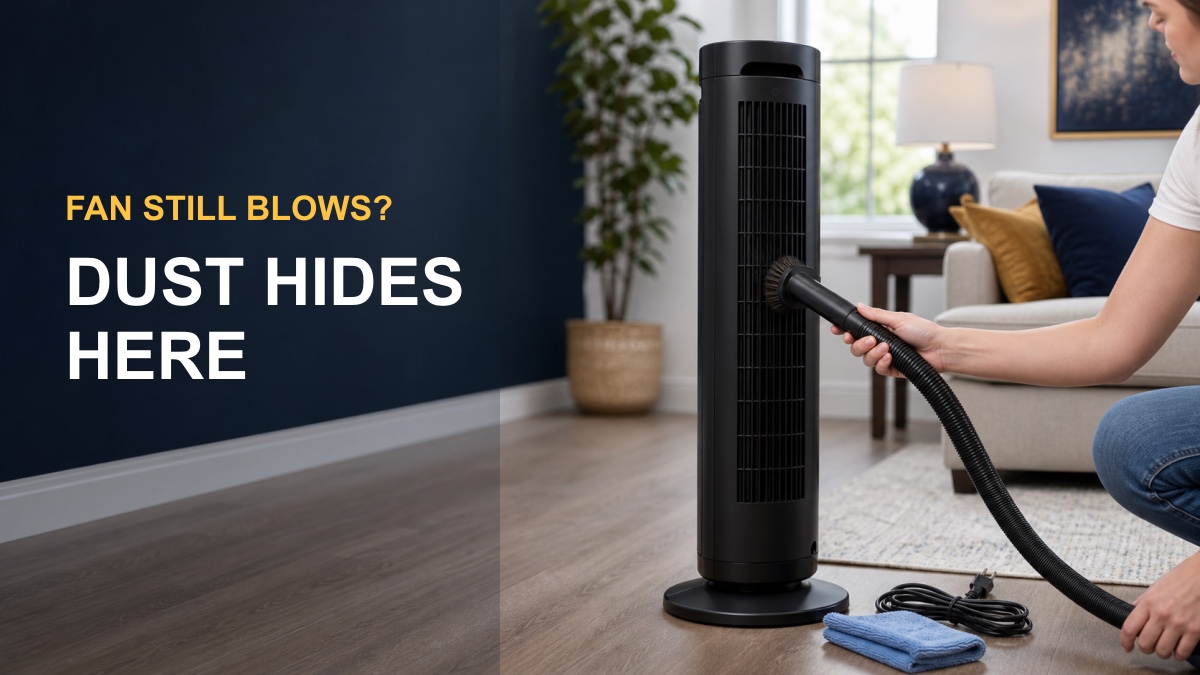
The tower fan still spins, so it looks ready for the closet. Shine a flashlight across the rear grille and the hidden gray felt of summer dust tells another story.
To clean a tower fan, unplug it, vacuum the intake and exhaust grilles with a brush attachment, wipe the housing with a soft cloth, and store it only when dry.
Do not spray cleaner into the vents or dismantle a sealed fan unless the exact manual provides a user-cleaning procedure. Dust removal should not create an electrical hazard.
A tower fan can look clean from the front while its rear intake holds the season’s real dust load.
The Flashlight Test: Where the Dust Actually Hides
Inspect the rear intake grille, front outlet louvers, base seam, control recess, and remote cradle. Hair and lint often collect low on the intake where room dust travels.
Some newer tower fans include a removable mesh or washable filter. Treat that as a model-specific feature, not permission to open every tower fan.
How to Clean a Tower Fan in Seven Safe Steps
- Power off and unplug the fan. Let any heated or combination model cool completely.
- Move it to a dry, well-lit area. Keep the plug and controls away from water.
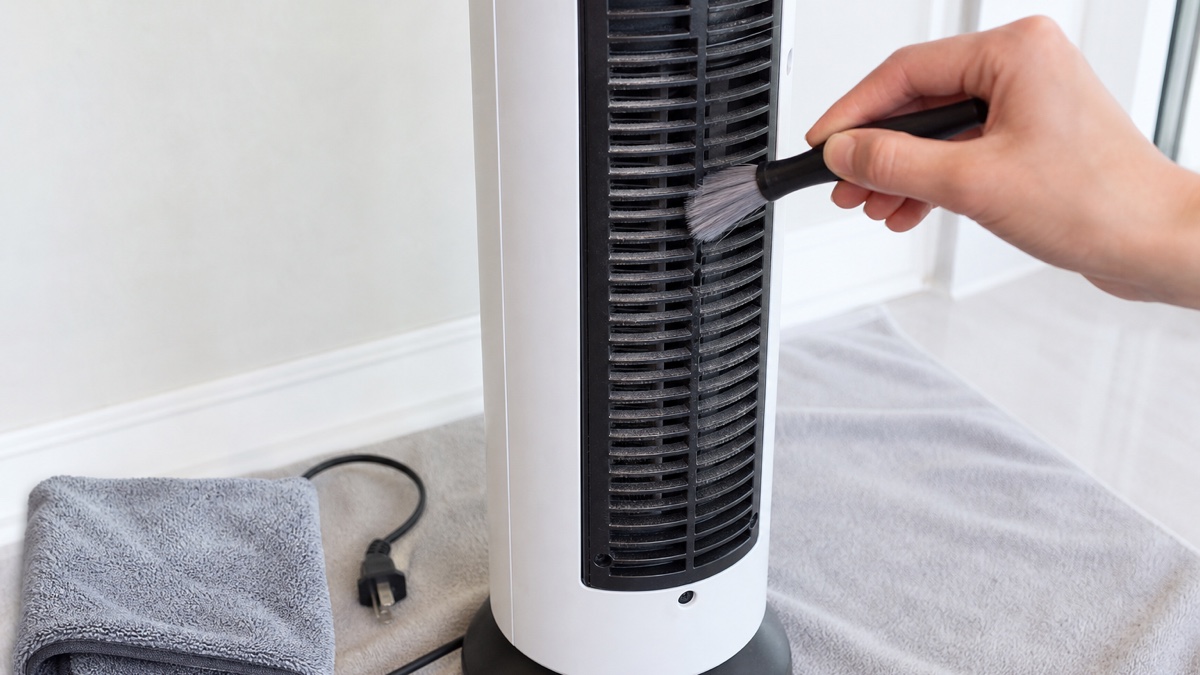
- Vacuum the rear intake. Use low suction and a soft brush so the grille is not cracked or pulled inward.
- Vacuum the front outlet. Work gently along the louvers without pushing debris into the cabinet.
- Wipe the housing. Use a dry microfiber cloth or a barely damp cloth if the manual permits, then dry it.
- Clean the base and remote. Remove batteries from the remote for long storage if the manual allows.
- Inspect the cord and test briefly. Stop if the cord is damaged, the fan smells hot, or the motor makes a new noise.
Never use alcohol, solvents, harsh cleaner, or a wet spray through the grille unless the manufacturer explicitly directs it. Never operate the fan until every cleaned surface is dry.
Compressed Air Is Not Always the Shortcut
A strong blast can drive dust deeper into the motor, spin internal parts too fast, or spread a dust cloud through the room.
A vacuum brush collects debris instead of relocating it. If the manufacturer names compressed air, follow its distance, direction, and pressure guidance exactly.
Store It Without Trapping Dust or Moisture
- Store the fan upright in a cool, dry interior space.
- Use the original carton or a breathable dust cover after the fan is completely dry.
- Coil the cord loosely; do not wrap it tightly around the base.
- Avoid an uncontrolled garage, damp basement, or hot attic.
- Keep heavy boxes off the fan and protect the grille from impacts.
Tape a small note to the cord with the cleaning date and any noise you noticed. You will know the fan was stored clean and whether it needs service before the first hot day.
For the rest of the home-air routine, check when to change an HVAC filter in Georgia and how to clean a dehumidifier without sending moisture into its electrical housing.
Frequently asked questions
Can I take a tower fan apart to clean the blades?
Only if the owner’s manual provides a consumer-access procedure. Opening a sealed cabinet can expose electrical parts, damage clips, and affect warranty coverage.
How often should I clean a tower fan?
Vacuum visible intake dust during the season and complete a careful cleaning before storage. Dusty homes or daily use may need more frequent attention.
Why does my tower fan smell after cleaning?
Stop using it if the odor is electrical, hot, or smoky. A persistent musty odor may indicate trapped moisture or contamination beyond safe exterior cleaning.
Sources and model guidance
Guidance checked in August 2026. Always follow the manual and label for the exact appliance, filter, or textile.