
How to Store Summer Bedding Without Mold or Musty Odors
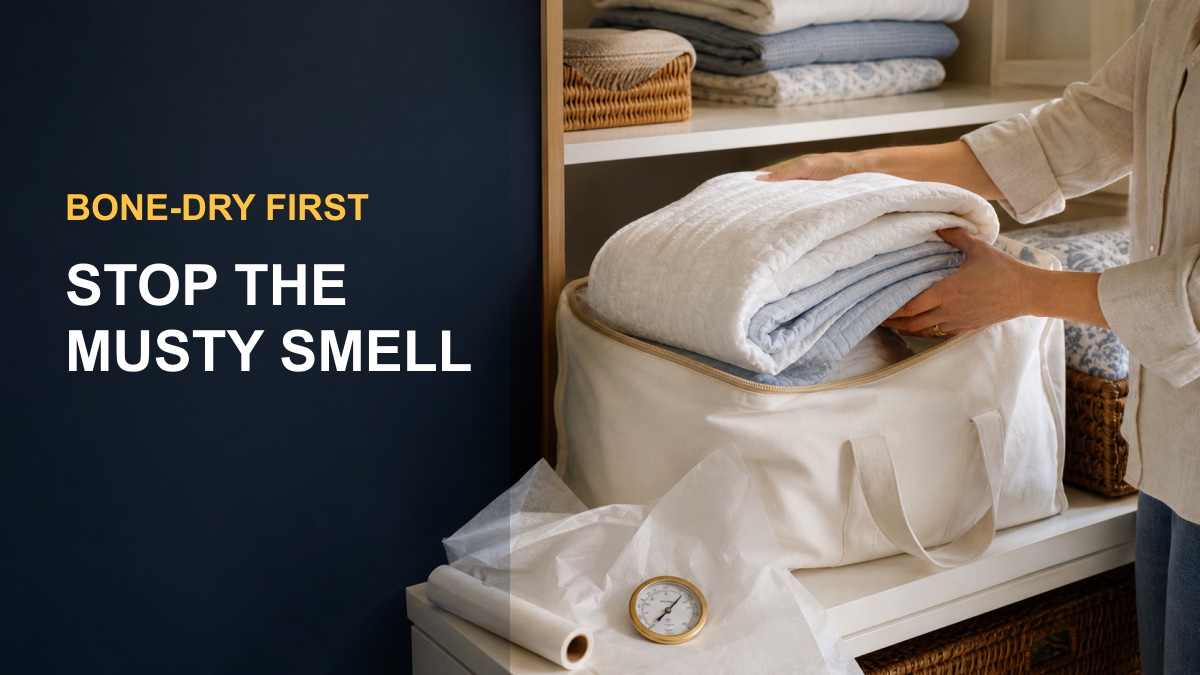
A lightweight quilt can leave the dryer feeling warm and still hide a trace of moisture in its batting. Seal it away, and that invisible dampness becomes next season’s musty surprise.
Wash summer bedding according to its care label, dry it completely, fold it without crushing the fill, and store it in a cool, dry, climate-controlled closet.
Use a breathable cotton bag for airflow or a clean stable-plastic bin for everyday washable bedding—but only after every layer is bone-dry.
The container is the second decision. The first is whether the bedding is truly clean and completely dry.
The Bone-Dry Test Before Anything Gets Packed
- Check the thickest seams and corners. They dry more slowly than the broad fabric surface.
- Let warm bedding cool before judging it. Heat can disguise slight dampness.
- Smell the center folds. A sour or damp odor means it is not ready for storage.
- Run another low-heat or air-dry cycle when the care label permits and you are uncertain.
EPA recommends keeping indoor relative humidity below 60 percent, ideally 30 to 50 percent. A small closet hygrometer can reveal a moisture problem before fabric develops odor.
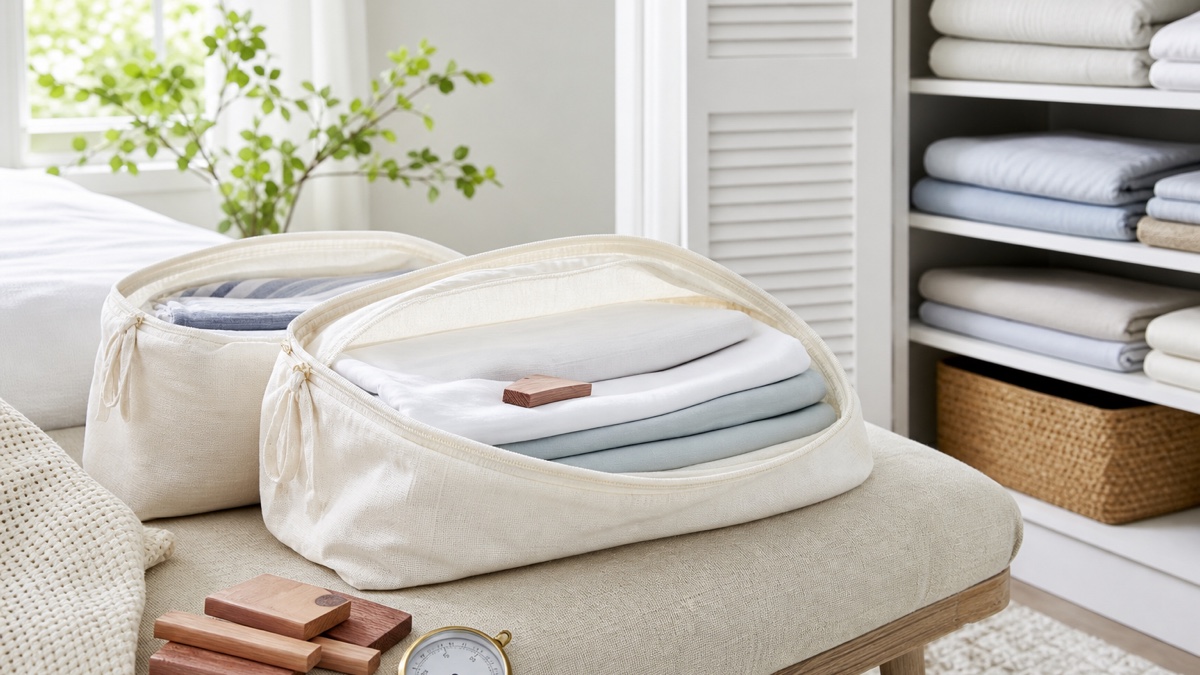
Breathable Bag or Plastic Bin?
| Container | Best use | Main caution |
|---|---|---|
| Breathable cotton bag | Quilts, comforters, and natural fibers in a clean closet | Does not block leaks, pests, or high room humidity |
| Polypropylene or polyethylene bin | Everyday washable sheets and blankets | Must be clean, dry, and not PVC or unknown plastic |
| Vacuum bag | Short-term space saving for sturdy synthetic items | Long compression can flatten down, batting, and loft |
| Cardboard box | Temporary moving use only | Absorbs moisture and can attract pests |
Historic and heirloom textiles need more conservative archival storage than everyday bedding. Smithsonian and extension guidance favors stable, breathable, cool, dark conditions and periodic inspection.
Do not add mothballs, strongly scented dryer sheets, or unwrapped cedar directly against bedding. Odors and oils can transfer, and mothballs are pesticides that require label-directed use.
How to Store Summer Bedding Step by Step
- Read every care label. Separate items that need dry cleaning or special handling.
- Wash before storage. Body oils, food, and skin residue can attract pests and set over time.
- Dry completely and cool fully. Check seams, batting, and folded centers.
- Fold loosely with clean hands. Add acid-free tissue at hard folds for delicate pieces.
- Choose a clean container. Do not overfill or force lofted bedding flat.
- Label the contents and date. Note the bed size so you do not reopen every container.
- Store on a shelf in a conditioned closet. Keep containers off floors and away from plumbing.
The “Open It Before You Need It” Rule
Inspect stored bedding midway through the off-season. Look for condensation, new odor, pest evidence, stains, or deep creases, then refold along different lines.
Air the bedding in a dry room before putting it back into service. If mold is visible or the odor returns quickly, identify the moisture source before repacking.
An attached garage, attic, or unfinished basement can swing far beyond comfortable indoor humidity. A bedroom or hall closet inside the conditioned envelope is usually the safer choice.
Before packing seasonal linens, run the washing-machine cleaning routine, confirm the load is fully dry, and check our dryer vent schedule. A damp closet also calls for the dehumidifier maintenance guide, not fragrance that masks odor.
Frequently asked questions
Are vacuum bags safe for comforters?
They can work short-term for some sturdy synthetics, but long compression may damage loft in down, wool, and thick batting. Follow the care label and release compression periodically.
Should I put silica-gel packets with bedding?
They are not a substitute for dry bedding and a dry room. If used, keep packets intact, away from children and pets, and monitor room humidity.
Can I store bedding in the attic?
Avoid it when possible. Attics can experience extreme heat and humidity swings that accelerate yellowing, odor, mold, and fiber damage.
Sources and model guidance
Guidance checked in August 2026. Always follow the manual and label for the exact appliance, filter, or textile.