Money Tree vs Umbrella Tree (Schefflera): 7 Differences
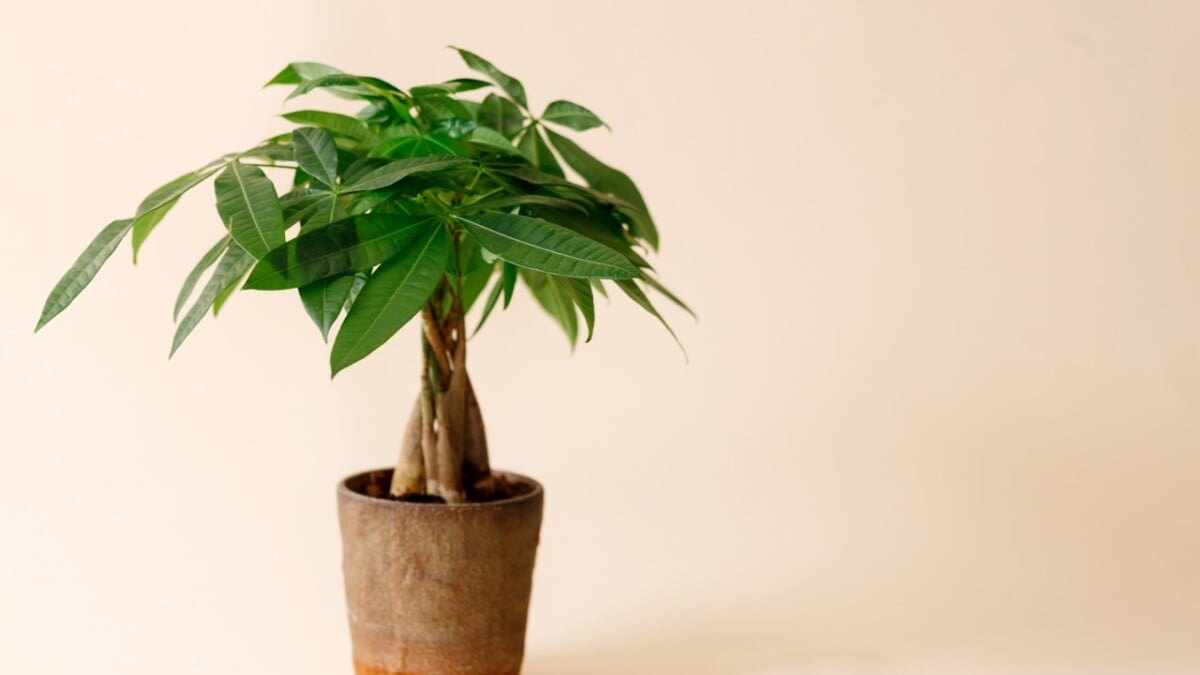
A money tree and an umbrella tree are not the same plant. The money tree is Pachira aquatica, while the common dwarf umbrella tree is Heptapleurum arboricola, formerly sold as Schefflera arboricola. They can look similar from across a room, but their trunks, leaf structure, care rhythm, and pet-safety profiles are different.
Use the photos and comparison below to identify your plant before choosing a watering routine. A braided trunk is a useful clue, but leaf shape and the botanical name on the label are more dependable than a common name alone.
Money Tree vs Umbrella Tree at a Glance
| Difference | Money Tree | Umbrella Tree / Schefflera |
|---|---|---|
| 1. Botanical identity | Pachira aquatica, mallow family (Malvaceae) | Heptapleurum arboricola, aralia family (Araliaceae) |
| 2. Leaf pattern | Often 5–7 long leaflets spread like a hand | Often 7–9 rounder, glossy leaflets arranged like umbrella spokes |
| 3. Trunk | Often sold with several flexible trunks braided together | Usually develops woody, branching stems rather than a braid |
| 4. Indoor size | Often about 6–8 feet indoors when mature | Dwarf umbrella tree is commonly about 4–6 feet indoors |
| 5. Light | Bright, indirect light is ideal | Bright filtered or indirect light; tolerates some variation |
| 6. Watering | Even moisture with excellent drainage; never leave it standing in water | Let the mix dry somewhat, then soak and drain thoroughly |
| 7. Household safety | Still keep plant material away from children and pets | Schefflera contains irritating calcium oxalates and is toxic to cats and dogs |
How to Identify a Money Tree
A money tree (Pachira aquatica) has hand-shaped leaves made of several relatively long, narrow leaflets. Nursery plants often have multiple trunks braided together. The braid is a growing style, not a separate species, so an unbraided money tree is still a money tree.
Look at an entire leaf where the leaflets meet. Do not count unrelated leaves across a branch. Leaflet numbers can vary, so a count alone cannot settle the identification. The long leaflet shape, trunk and plant label should agree.
How to Identify an Umbrella Tree
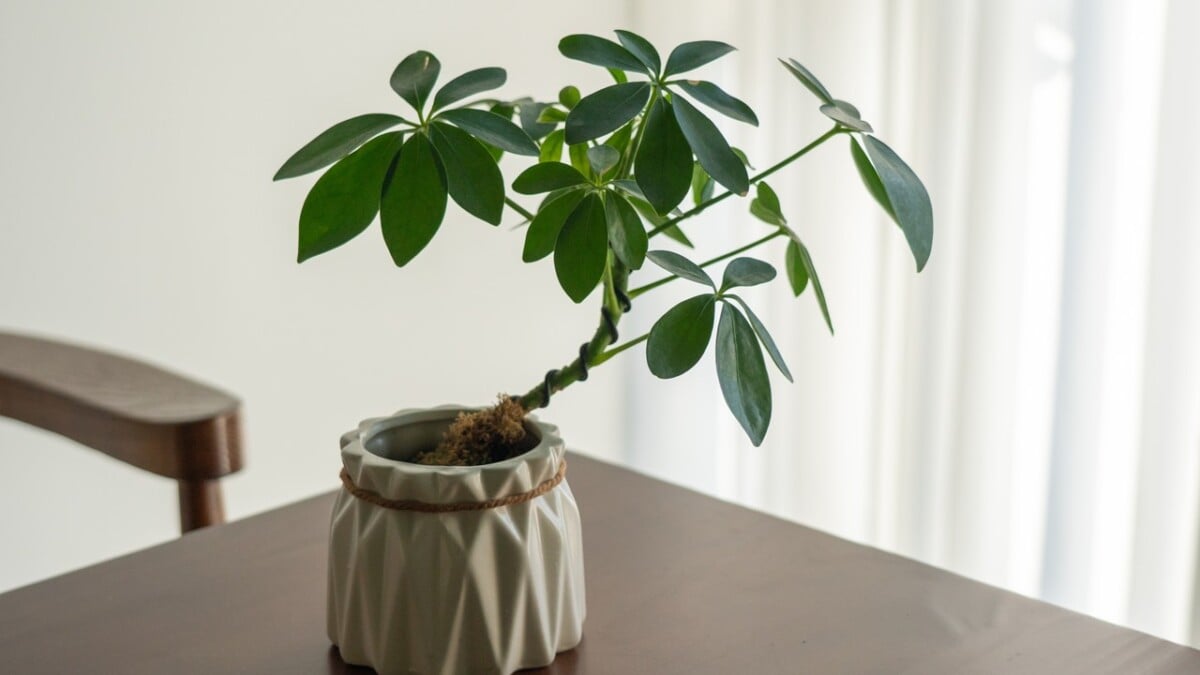
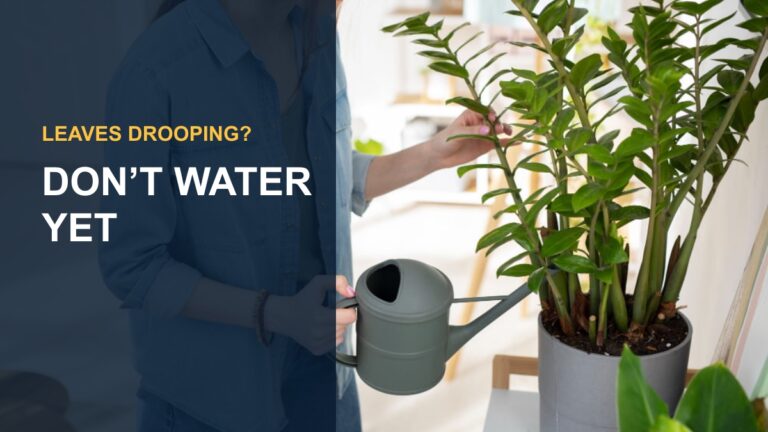
The dwarf umbrella tree (Heptapleurum arboricola, also sold as Schefflera arboricola) usually has shorter, rounder, glossy leaflets arranged like umbrella spokes. Its woody stems branch naturally. Green and variegated forms both belong to this familiar houseplant group.
“Umbrella tree” can also refer to a larger species, Heptapleurum actinophyllum. Check the botanical name when mature size matters. Photos here show the dwarf umbrella tree; an umbrella-shaped cluster of leaves by itself does not mean that the plant is Pachira.
Which Plant Fits Your Room?
- For a bright room: both work well in bright, indirect light. Begin away from intense afternoon sun, especially after a move from a nursery or a darker room.
- For a smaller space: check the variety and the plant’s current size. Both can become substantial indoor plants; “dwarf” does not mean it stays tabletop-sized indefinitely.
- For a low-light corner: neither is a strong first choice for healthy, vigorous growth. Move closer to filtered window light rather than compensating with extra fertilizer.
- For a home with pets: umbrella tree contains irritating calcium oxalates and should stay out of reach. Check the exact species against a veterinary toxicity reference before choosing any accessible plant.
Watering: Similar Drainage Needs, Different Decisions
Both plants need a container with working drainage holes. Water the mix thoroughly when the plant needs it, let excess water drain and empty the saucer or decorative outer pot. A plant’s preferred conditions in its native habitat do not justify leaving a houseplant in stagnant water.
For a money tree, keep the mix from remaining waterlogged and let its upper layer begin to dry before watering again. For an umbrella tree, also allow the upper mix to dry between waterings. Pot size, soil, light and season determine how quickly this happens. Do not transfer one plant’s calendar directly to the other.
Yellow leaves do not establish that either plant is thirsty. Check deeper moisture and drainage first. If the mix stays wet, reduce the watering frequency and investigate roots rather than repeatedly adding small drinks. A pot without drainage makes diagnosis harder, even if the leaves initially look fine.
Choosing Between Them
Choose a money tree if you prefer long leaflets and the braided-trunk appearance. Choose a dwarf umbrella tree if you prefer a branching silhouette and rounder foliage. Once you identify it, choose the position and pot for that plant instead of relying on the similar-looking leaves. For a Schefflera that needs a new container, use our umbrella plant pot-size guide to avoid moving it into an unnecessarily large pot.
Botanical details and care references: NC State Extension’s money tree profile and dwarf umbrella tree profile.
Frequently Asked Questions
Is a money tree a Schefflera?
No. A money tree is Pachira aquatica. The common dwarf umbrella tree is Heptapleurum arboricola, formerly classified as Schefflera arboricola.
Can a money tree have an unbraided trunk?
Yes. Braiding is a nursery technique. Identify the plant using its leaves and botanical name as well as its trunk.
Can I use the same watering schedule for both?
Use the same drainage precautions, but assess each pot separately. Different pot sizes, light and mixes can make their watering intervals different.