How Often Should You Replace Your Vacuum Filter?
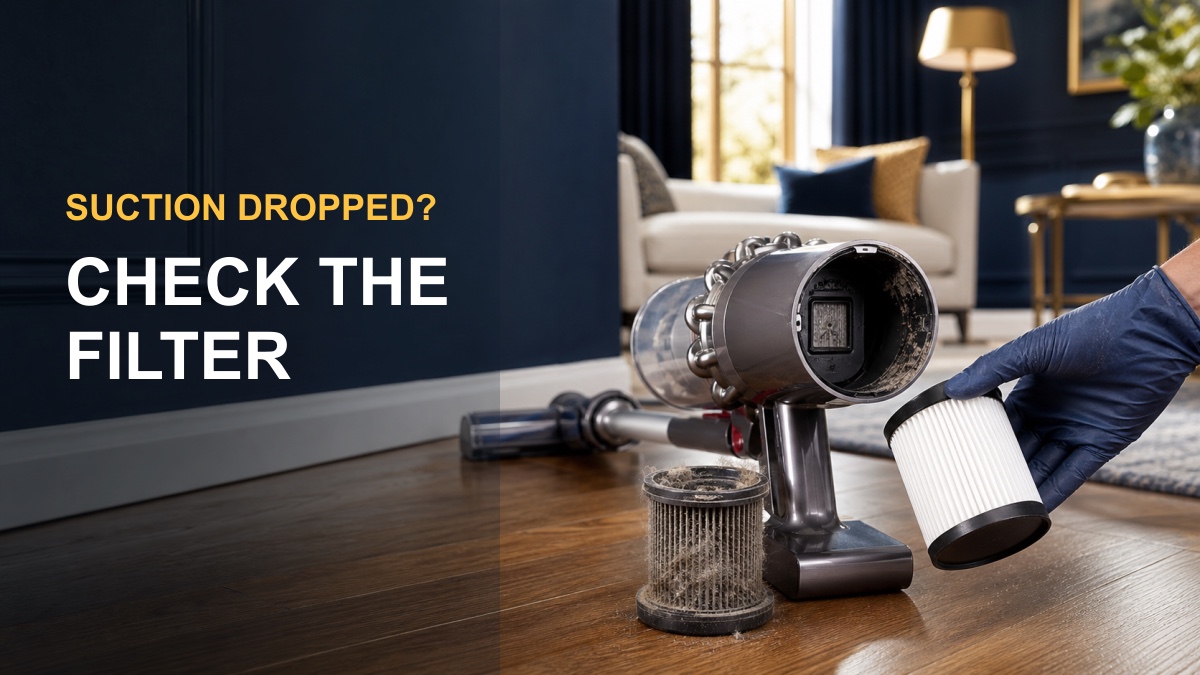
The vacuum is running, but the rug still looks tired and a faint dusty smell follows each pass. The motor may not be the first problem.
Most vacuum filters should be checked monthly, cleaned only when the manual says they are washable, and replaced when damaged or when cleaning no longer restores airflow.
There is no honest universal replacement date. Some washable filters can last for years with care, while a model-specific disposable filter may need replacement within months.
The right schedule is not “every six months.” It is: inspect monthly, follow the model manual, and replace the filter when cleaning no longer restores performance.
The Filter Clock: Wash, Replace, or Leave It Alone?
| Filter situation | What to do | Typical checkpoint |
|---|---|---|
| Washable pre-motor filter | Rinse only as the manual directs; reinstall completely dry | Inspect monthly |
| Non-washable HEPA or exhaust filter | Vacuum exterior dust only if allowed; replace, do not rinse | Follow the model interval |
| Torn, punctured, warped, or crumbling filter | Replace immediately with the correct part | Do not keep using it |
| Persistent odor or weak suction after cleaning | Check clogs and seals, then replace if the filter remains the cause | Replace sooner |
Dyson commonly tells owners to wash specified filters about monthly. A Shark handheld manual, by contrast, gives a six-to-nine-month replacement note for that particular filter.
Those examples are not interchangeable. The model number and filter type decide whether water helps or ruins the part.
Four Signs the Filter Has Reached the End
- Suction stays weak after the bin, brush roll, and airway are cleared.
- Dust escapes from the exhaust or fine debris appears around a seated filter.
- A clean, dry filter still smells musty during operation.
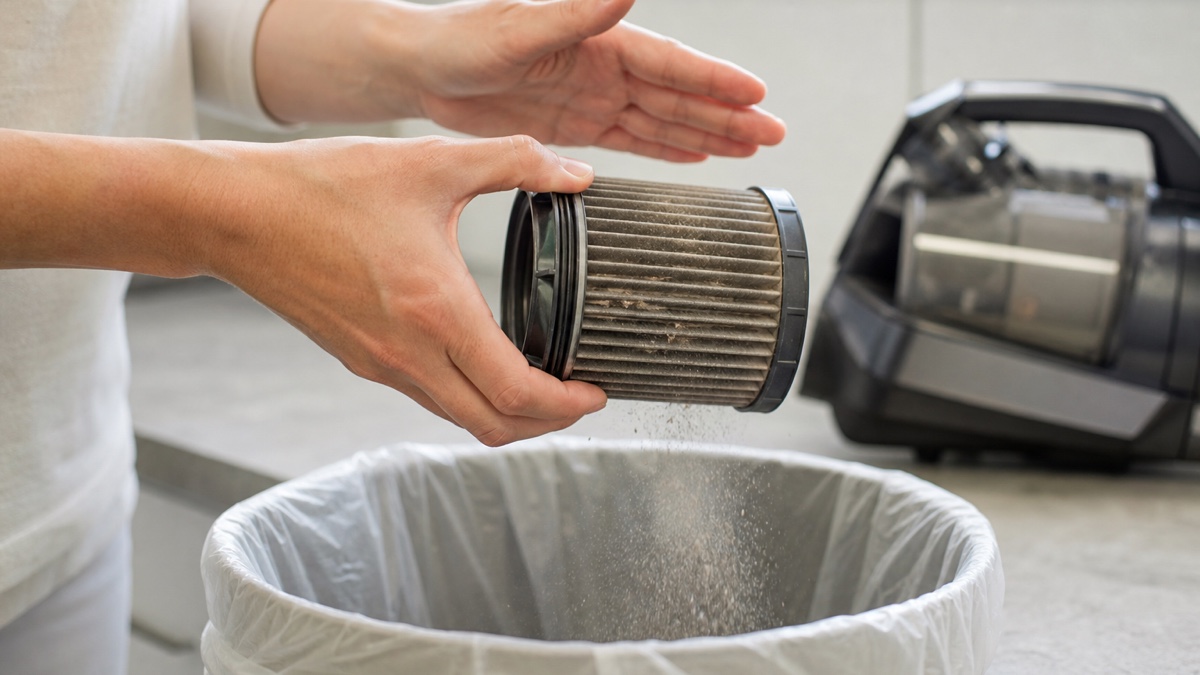
- The media is torn, punctured, warped, brittle, or no longer seals.
A dark filter is not automatically dead, and a pale filter is not automatically healthy. Look at airflow, structure, odor, and the maintenance instructions together.
Never reinstall a damp filter. Trapped moisture can cause odor, reduce airflow, and move moisture toward the motor. Air-dry for the full time stated in the manual.
How to Clean a Washable Vacuum Filter Safely
- Unplug or power off the vacuum. Remove the battery if the manual requires it.
- Empty the bin outdoors or over a lined trash can. Avoid shaking fine dust into the room.
- Confirm the filter is washable. Check the label, owner’s guide, or manufacturer parts page.
- Rinse with cold water only unless the manual explicitly names a cleaner.
- Let it air-dry completely. Twenty-four hours is common, but the exact manual wins.
- Reinstall it in the correct orientation. A poor seal can let dust bypass the media.
Do not speed drying with a hair dryer, clothes dryer, oven, or direct high heat. Heat can deform filter media and sealing edges.
The Five-Minute Monthly Check
Put one reminder on the first weekend of each month. Empty the bin, inspect the filter, clear the brush roll, and look for a crushed hose or blocked intake.
Homes with shedding pets, renovation dust, fine litter, or frequent cleaning may load a filter faster. Shorten the inspection interval instead of guessing a new replacement date.
For a shedding-pet routine, pair filter maintenance with our pet carpet-cleaning workflow, which separates dry vacuuming from wet extraction.
Frequently asked questions
Can I wash every vacuum filter?
No. Wash only a filter that the exact vacuum manual identifies as washable. Water can permanently damage paper, HEPA, and other non-washable media.
Why is suction still weak after I cleaned the filter?
Check the bin, brush roll, wand, hose, intake, seals, and filter seating. A hidden clog or air leak can imitate a worn filter.
Can I use a generic replacement filter?
A replacement must fit and seal correctly. Use the part number in the manual or a manufacturer-approved cross-reference rather than relying on appearance.
Sources and model guidance
Guidance checked in August 2026. Always follow the manual and label for the exact appliance, filter, or textile.